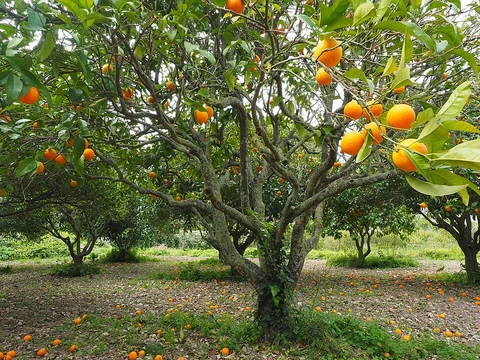
Pear
A genus of trees bearing edible pome fruit, cultivated worldwide.

Pears are a genus of trees, Pyrus, in the family Rosaceae, that bear an edible apple-like fruit of the same name. Several species are cultivated for their fruit and juices, while others are grown as ornamental flowering trees. The genus is thought to have originated in Central Asia, specifically the foothills of the Tian Shan in present-day Western China, and has spread to Europe, North Africa, and temperate Asia.
- genus
- Pyrus
- family
- Rosaceae
- native_range
- Asia, Europe, mountains of North Africa
- world_production_2024
- about 28 million tonnes
- leading_producer
- China (76% of total)
- known_varieties
- about 3,000
- uses
- fruit, juice, perry, ornamental, timber for instruments and furniture
Lore & Background
The word pear comes from Old English pere or peru, from Vulgar Latin pera, from Latin pirum, probably akin to Greek apion. The source is likely an ancient Mediterranean language, perhaps Semitic. The classical Latin word for a pear tree is pirus; pyrus is an alternate form used in medieval Latin. Pears are mostly small or medium-sized trees, with leaves alternately arranged, simple, and glossy green or silvery-hairy. Most are deciduous, but one or two species in Southeast Asia are evergreen. The flowers are white, rarely tinted yellow or pink, with five petals, five sepals, and numerous stamens. The fruit is a pome, shaped from oblate to the classic pyriform 'pear shape'.
Reader's Guide
Pears have been cultivated since prehistoric times, with evidence from pile dwellings around Lake Zurich and in China as early as 2000 BC. The Romans cultivated pears, eating them raw or cooked, and introduced them to Britain. Pliny's Natural History noted three dozen varieties. The enormous number of varieties of the cultivated European pear likely derive from one or two wild subspecies. Asian species with edible fruit include P. pyrifolia, P. ussuriensis, P. × bretschneideri, and P. × sinkiangensis. About 3,000 varieties are grown worldwide. The fruit is consumed fresh, canned, as juice, dried, or fermented as perry. Pear wood is a preferred material for high-quality woodwind instruments and furniture. Pears are propagated by grafting onto rootstocks, often of quince for smaller trees.
Did You Know?
- The word pear likely originates from an ancient Mediterranean language, possibly Semitic.
- Pear wood is a preferred material for high-quality woodwind instruments and furniture.
- About 3,000 varieties of pears are grown worldwide, varying in shape and taste.
- The pear fruit is a pseudofruit composed of the swollen receptacle, enclosing 2–5 cartilaginous carpels known as the core.
Frequently Asked Questions
What is a pear?
A pear is the edible pome fruit produced by deciduous trees in the genus Pyrus, members of the rose family (Rosaceae). The fruit is apple-like in structure and is eaten fresh, pressed into juice, or used in cooking.
Where did pears originally come from?
Pears are believed to have first appeared in the foothills of the Tian Shan mountains in present-day western China. Over time the genus spread across temperate Asia, Europe, and the mountainous regions of North Africa.
What is the pear's botanical classification?
Pears sit in the genus Pyrus within the family Rosaceae, the same family that includes roses, apples, and cherries. They are native to temperate zones spanning Asia, Europe, and the mountains of North Africa.
Are pears grown only for their fruit?
Not exclusively—while most cultivated pears are valued for their edible fruit and pressed juices, a number of Pyrus species are planted purely as ornamental flowering trees in gardens and public landscapes.
More in Common Plants And Crops 1-24
Elsewhere in the Common Plants And Crops universe
Spotted an error? Know more?
This is a living reference — every entry is fact-audited, and reader corrections feed straight into our audit queue. Suggest an edit · See this site's audit record